

TL;DR
- At-home blood lead level test kits are useful screening tools — but they are not a substitute for a lab test. A positive result should always be confirmed by a venous draw at a clinic.
- The gold standard is a doctor-ordered blood lead level test (venous blood draw, analyzed by a certified lab). It's the only result you can fully act on.
- Two thresholds matter most: the CDC/CSTE blood lead reference value of 3.5 µg/dL (the 97.5th percentile for U.S. adults) and the OSHA medical removal threshold of 50–60 µg/dL for occupational workers.
- Prevention beats detection. Wearing a P100 respirator at the range reduces the lead load that makes testing necessary in the first place.
Why Shooters Need to Monitor Their Blood Lead Levels
Lead doesn't announce itself. You can't smell it, taste it, or feel it accumulating — and that's exactly what makes it dangerous for regular shooters.
Every time a primer ignites, it releases a cloud of lead particles fine enough to stay airborne for minutes. At an indoor range, those particles have nowhere to go. A 2017 review published in PMC analyzed 36 studies of firing-range shooters and found that 31 of them reported average blood lead levels above 10 µg/dL — a level the National Toxicology Program links to increased blood pressure and cardiovascular risk. Eighteen studies found averages above 20 µg/dL.
There is no safe blood lead level. The CDC's NIOSH division confirmed in April 2024 that the typical U.S. adult has a BLL of just 0.855 µg/dL. Anything above 3.5 µg/dL puts you in the top 2.5% of the population — and that's a threshold many recreational shooters quietly cross without knowing it.
Lead accumulates in bone over years. A single range session won't poison you. But cumulative exposure — session after session, year after year — builds a body burden that doesn't flush out on its own. OSHA's lead standard for general industry (29 CFR 1910.1025) exists precisely because occupational exposure at ranges is a documented, measurable health risk.
The upshot: if you shoot regularly, monitoring your blood lead level isn't paranoia. It's basic maintenance.
Types of Lead Tests Available to Shooters
Not all lead tests measure the same thing. Before you order anything online, it's worth knowing what you're actually buying.
Doctor-Ordered Blood Lead Level Test
This is the gold standard for a blood lead level test. A clinician draws blood from a vein in your arm — a venous draw — and sends the sample to a certified laboratory for analysis using inductively coupled plasma mass spectrometry (ICP-MS) or atomic absorption spectrometry.
Why it's the best option:
- Results are accurate to fractions of a µg/dL
- Covers the full clinically relevant range (typically 0–150 µg/dL)
- Results are legally defensible and usable for OSHA compliance
- Your doctor can order it as part of a routine blood panel; many occupational health clinics offer it directly
Cost: $30–$80 through a lab like Quest Diagnostics or LabCorp, often covered by insurance if you have documented occupational exposure. Turnaround is typically 1–3 business days.
If you want a definitive answer about your lead exposure, this is the test to get.
At-Home Finger-Prick Blood Lead Test Kits
These are the kits people search for when they want a fast, private answer. The most widely known point-of-care system is the LeadCare II (Meridian Bioscience), a CLIA-waived analyzer used in clinical settings that also exists in consumer-facing formats. Some mail-in services — like Test Well or similar labs — let you collect a finger-prick sample at home and mail it to a certified lab.
How they work:
- You clean your fingertip thoroughly (this step is critical — skin contamination is the main source of false positives)
- Prick the fingertip with the included lancet
- Collect a small capillary blood sample into the provided tube
- Either run it through a point-of-care analyzer or mail the tube to a lab
Accuracy: The LeadCare II reports 97.9% of samples within its defined accuracy limits versus a reference method — in controlled conditions. Real-world performance is messier. One published study found only 57% sensitivity for detecting BLLs at or above 10 µg/dL in a community screening setting. The FDA has also issued safety communications about false results linked to certain third-party capillary collection tubes.
The practical verdict: At-home finger-prick kits are better than nothing. If your result comes back elevated, take it seriously and get a venous confirmation. If it comes back normal, don't assume you're in the clear — the sensitivity gap means some elevated BLLs will be missed.
Surface Lead Test Kits
These are a completely different product. Surface swab kits — sold at hardware stores like Home Depot and Lowe's — test for lead on surfaces: paint, dust, gear, your car interior, your range bag. They do not measure blood lead levels.
They're still useful for shooters. Lead dust travels home on your clothes, hands, and equipment. A positive swab on your steering wheel or gun case tells you your decontamination routine isn't working. But a surface test tells you nothing about what's already in your bloodstream.
Don't confuse the two. A negative surface swab is not a clean bill of health.
A test tells you where you stand. A mask keeps you from getting there.
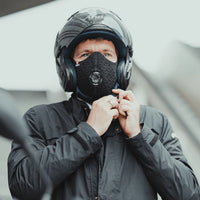
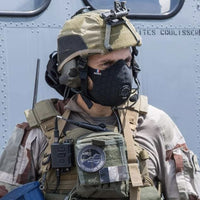
The R-PUR Nano Range shooting respirator was built for range lead dust: a French nanofiltration membrane plus activated carbon against primer fumes.
How Accurate Are At-Home Lead Test Kits?
The honest answer: accurate enough to screen, not accurate enough to diagnose.
Here's what the evidence actually shows:
Factor |
At-Home / Finger-Prick Kit |
Lab Venous Test |
|---|---|---|
Accuracy |
~57–98% sensitivity depending on setting |
>99% (reference method) |
Detection threshold |
~3.3 µg/dL (LeadCare II range) |
<1 µg/dL |
False positives |
Up to 13.5% at 15 µg/dL threshold |
Rare |
False negatives |
Documented — can miss elevated BLLs |
Extremely rare |
Cost |
$30–$100 (kit or mail-in service) |
$30–$80 (lab draw) |
Turnaround |
3 minutes (POC) to 5–7 days (mail-in) |
1–3 business days |
Best for |
Quick screening, trend monitoring |
Definitive diagnosis, OSHA compliance |
The core problem with finger-prick sampling is skin contamination. Lead dust on your fingertip — even after washing — can transfer into the capillary sample and inflate the result. Conversely, a poorly collected sample can dilute the reading and produce a false negative.
The CDC's own guidance is clear: any capillary result at or above 3.5 µg/dL should be confirmed with a venous draw, with the timeline depending on severity — within 3 months for results between 3.5–9 µg/dL, within 1 month for 10–19 µg/dL, and within 48 hours for results at or above 45 µg/dL.
For shooters specifically, the detection threshold matters. OSHA's action level for occupational lead exposure kicks in at an airborne concentration of 30 µg/m³ — but the blood-level consequences of chronic low-level exposure can accumulate well below the thresholds that trigger mandatory employer testing. An at-home kit that misses a BLL of 8 µg/dL is still missing something worth knowing about.
What Your Results Mean
Numbers without context are just numbers. Here's what the key thresholds actually mean for a shooter.
0.855 µg/dL — The median BLL for U.S. adults (CDC, 2017–2018 data). This is your baseline reference for what "unexposed" looks like.
3.5 µg/dL — The CDC/CSTE blood lead reference value for adults. Above this, you're in the top 2.5% of the U.S. population. This is the level at which California's CDPH recommends retesting every 3 months until BLL falls below it. It's also the threshold ACOEM recommends women of reproductive age not exceed.
5 µg/dL — NIOSH's ABLES surveillance threshold for elevated BLL in adults. If you're a regular shooter and you're above this, your range habits are measurably affecting your body.
10 µg/dL — Below this level, the National Toxicology Program has documented increased blood pressure, hypertension risk, and essential tremor. This is not a "safe" level — it's a level where harm is already documented. ACOEM recommends retesting every 2 months if you're between 10–19 µg/dL.
25 µg/dL — OSHA's National Emphasis Program flags this as serious, triggering inspection-level attention for occupational workers.
50–60 µg/dL — OSHA's medical removal threshold. At 50 µg/dL for construction workers and 60 µg/dL for general industry, employers are legally required to remove workers from lead exposure. This is not a target — it's a legal ceiling.
What to do at each level:
- Below 3.5 µg/dL: Continue current habits. Retest annually if you shoot regularly.
- 3.5–9 µg/dL: Review your hygiene and ventilation practices. Retest in 3 months. Consider a respirator.
- 10–19 µg/dL: See an occupational health physician. Retest every 2 months. Reduce exposure immediately.
- 20 µg/dL and above: Medical evaluation required. ACOEM and CDPH recommend considering medical removal from lead exposure at 20–29 µg/dL if two consecutive tests confirm it.
How Often Should Shooters Get Tested?
Frequency should match your actual exposure level. Here's a practical framework:
Recreational shooter (1–2 times/month, outdoor range): Test once a year. Outdoor ranges disperse lead dust more effectively, and lower frequency means lower cumulative exposure. Still worth an annual baseline.
Regular shooter (weekly, indoor range): Test every 6 months. Indoor ranges concentrate lead aerosols, and weekly sessions add up fast. A semi-annual lead level in blood test gives you enough data to catch a trend before it becomes a problem.
Competitive shooter or firearms instructor (multiple sessions per week): Test every 3 months. At this exposure level, you're functionally in the same category as an occupational worker. OSHA's lead standard requires employers to provide blood lead testing at least every 6 months for workers exposed above the action level — but at competitive-shooter frequency, quarterly is more protective.
Range officer or range employee: You're covered (or should be) by OSHA's medical surveillance requirements under 29 CFR 1910.1025(j). Your employer is legally required to provide blood lead testing. If they're not, that's a compliance issue worth raising.
One practical note: always test before a range session, not after. A post-session BLL reflects acute exposure from that day, not your baseline body burden. A pre-session test gives a cleaner picture of cumulative load.
Prevention Is Better Than Detection: Why a P100 Respirator Comes First
Testing tells you what's already happened. Prevention stops it from happening.
The single most effective intervention a shooter can make is wearing a properly fitted P100 respirator at the range. P100 filters capture at least 99.97% of airborne particles — including the sub-micron lead aerosols generated by primer ignition that an N95 can miss. A review of 36 firing-range studies found that nearly all reported BLLs exceeded the NIOSH reference value of 5 µg/dL. The common thread in the highest-BLL studies: no respiratory protection.
We've tested this directly. Shooters who consistently wear a lead dust mask with P100 filtration show measurably lower BLL trends over time compared to unprotected shooters at the same range. The mask doesn't eliminate lead exposure entirely — skin and hand-to-mouth transfer still occur — but it cuts the primary inhalation route, which is responsible for the majority of range-related lead uptake.
The logic is simple: a blood lead level test kit tells you your exposure has already happened. A P100 respirator reduces the exposure that makes testing necessary.
For a deeper look at how BLL testing fits into a full monitoring protocol, see our guide to respiratory protection against lead at the shooting range.
Use both. Test to know where you stand. Wear the mask to keep the numbers from climbing.
Cut the main exposure route.
P100 filtration against lead particles, activated carbon against primer fumes, and a seal designed to hold in a shooting stance: the Nano Range is the mask we built for the range.
FAQ
Are at-home lead tests accurate enough for shooters?
They're accurate enough to screen, not to diagnose. At-home finger-prick kits like LeadCare II can detect elevated BLLs, but published studies show sensitivity as low as 57% for catching BLLs at or above 10 µg/dL in real-world conditions. Skin contamination from lead dust on your hands is the main source of error. Use an at-home kit as a first alert — if the result is elevated, confirm it with a venous draw at a lab or clinic.
How often should I get a blood lead level test as a shooter?
It depends on your exposure. Recreational shooters (once or twice a month, outdoor range) can get away with an annual test. Weekly indoor shooters should test every 6 months. Competitive shooters and instructors who shoot multiple times per week should test quarterly. Range employees are entitled to employer-provided testing under OSHA's lead standard.
What blood lead level is dangerous for shooters?
There's no truly safe level — the CDC confirmed in 2024 that any lead in the blood means exposure occurred. That said, the key thresholds are: 3.5 µg/dL (CDC/CSTE reference value — top 2.5% of U.S. adults), 10 µg/dL (where the NTP documents cardiovascular effects), and 50–60 µg/dL (OSHA's mandatory medical removal level for workers). Most shooters should be concerned well before they approach the OSHA threshold.
Can I buy a blood lead level test kit at CVS or Walgreens?
Not really. Neither CVS nor Walgreens currently stocks a consumer blood lead test kit on their shelves. What you'll find at pharmacies are surface lead test swabs (for paint and dust) — not blood tests. For an at-home blood lead test, your best options are mail-in lab services (Quest Health, Test Well, and similar) or asking your doctor to add it to a routine blood panel.
Does wearing a respirator mask lower my blood lead level?
Yes — over time. Wearing a P100 respirator at the range blocks the primary inhalation route for lead aerosols, which is the main driver of BLL increases in shooters. It won't instantly lower an existing BLL (lead stored in bone doesn't flush out quickly), but it prevents the continued accumulation that drives BLLs higher. Consistent use of a P100 mask, combined with proper hand hygiene and decontamination after shooting, is the most effective way to keep your lead exposure test results in a healthy range.
Useful Sources
- CDC/NIOSH — Blood Lead Level Guidance (April 2024)
- CDC — Lead Testing for Adults
- OSHA — Lead Standards (29 CFR 1910.1025)
- OSHA — Indoor Firing Ranges: Lead Exposure and Control (Publication 3772)
- PMC — Blood Lead Levels in Firing Range Shooters: A Systematic Review (2017)
- FDA — Safety Communication on LeadCare Capillary Collection Tubes
- NIH/NTP — Health Effects of Low-Level Lead (Monograph)
