
TL;DR
Reusable respirators beat disposable masks on every metric that matters at the range - filtration, cost, comfort, and waste. 🎯
A disposable N95 gets tossed after one dusty session (or even mid-session once it's soaked with sweat). A reusable respirator with a replaceable P100/ABEK filter keeps its seal, keeps its filtration efficiency, and keeps working for years. You just swap the cartridge.
If you shoot more than a few times a year, the math isn't close. Disposables cost you more over 12 months, protect you less consistently, and pile up in landfill. Let's break down exactly why.

Why lead dust at the range is no joke
Every round fired sends a cloud of ultra-fine lead particles, primer residue, and combustion byproducts into the air - especially indoors. OSHA's lead standard (29 CFR 1910.1025) sets the permissible exposure limit at 50 µg/m³ averaged over 8 hours, with an action level of 30 µg/m³ that triggers medical monitoring [1]. Indoor ranges with poor ventilation blow past these limits routinely, and NIOSH has documented lead exposure incidents at ranges for decades [2].
That's the backdrop for this whole comparison. A mask that doesn't seal properly, or that loses filtration halfway through a session, isn't a minor inconvenience - it's the difference between walking out clean and walking out with lead dust on your face and in your lungs.
Reusable mask vs disposable mask: filtration face-off
This is the part most shooters get wrong. They assume a fresh disposable mask filters just as well as a reusable one. On paper, sort of. In practice, not even close.
Disposable N95/FFP2 masks:
-
Rated for a minimum 95% filtration of 0.3-micron particles when new [3]
-
Seal degrades fast - sweat, talking, and repeated donning/doffing loosen the fit
-
No structure to keep the seal consistent shot after shot
-
Meant for single use; reusing one defeats the point
Reusable respirators with replaceable filters:
-
Studies on elastomeric respirators show they deliver a meaningfully better real-world seal and workplace protection factor than disposable N95s of the same nominal rating, thanks to the rigid facepiece design [3]
-
Filters can be rated P100 or combined ABEK-type cartridges for particles and gases (VOCs, solvent fumes from cleaning, primer gases)
-
The seal stays consistent because the mask body doesn't collapse or shift like foam-and-elastic disposables do
Bottom line: same filtration number on the box doesn't mean same protection on your face. A reusable respirator's rigid frame and replaceable cartridge give you a seal you can actually trust round after round. 🔒
Cost-over-time: the math disposables don't want you to do
Here's where "cheap" disposable masks stop looking cheap.
|
Disposable mask |
Reusable respirator (R-PUR style) |
|
|
Upfront cost |
$1–3 per mask |
$50–90 for the mask body |
|
Per-session cost |
New mask every visit |
Filter swap every ~20–40 hours of use |
|
Cost after 1 year (weekly shooter) |
$50–150+ in masks alone |
Mask body (one-time) + 2–4 filter cartridges |
|
Cost after 3 years |
$150–450+ |
Mask body lasts, only filters recur |
|
Waste generated |
A mask a week, every week |
A handful of spent cartridges |
If you shoot once a week, disposables can cost you more in year one than a quality reusable respirator - and every year after that, you're paying for a brand-new mask body you don't actually need. With a reusable setup, you're only ever replacing the part that wears out: the filter.
That's the entire business logic behind R-PUR's model - sell you a mask that lasts, and let you buy just the cartridge when it's spent. No re-buying the whole unit every month.
Comfort: the thing that decides if you'll actually wear it
The best respirator is the one you keep on for the whole session. A mask that fogs your glasses, pinches after 20 minutes, or makes you overheat gets pulled down - and the second it comes off, you're breathing exactly what it was supposed to block.
Disposable masks are light, sure, but:
-
Thin straps dig in after long sessions
-
No exhalation valve on most models = hot, damp, uncomfortable
-
One-size-fits-most rarely fits most faces well
Reusable respirators are built for repeat wear:
-
Adjustable straps and moldable nose bridges for a real seal
-
Exhalation valves reduce heat and moisture buildup
-
Designed to be worn for hours without the mid-session "I need to take this off" moment
If comfort keeps you compliant, and compliance is the whole point of wearing protection, this category isn't even close.

Environmental waste: the disposable habit adds up fast
Zoom out from your own range bag for a second. Disposable masks are a genuine plastic waste problem - MIT researchers estimated that if every person used one single-use mask a day, that's roughly 129 billion masks a month worldwide, and a huge share of pandemic-era mask waste ended up in landfill or the ocean [4]. Producing a single disposable mask also generates roughly 30+ grams of CO₂-equivalent emissions [4] - multiply that by every range visit, every year, for every shooter at your club.
A reusable respirator flips that. One mask body, worn for years, with only the spent filter cartridge going in the bin. Less plastic, less waste, less guilt - and honestly, less stuff cluttering your range bag too. 🌍
So, which one actually wins?
Reusable respirators win. Better and more consistent filtration thanks to a proper seal, lower cost after your first year of regular shooting, more comfort for long sessions, and a fraction of the waste. Disposable masks still have a place - a backup in your bag, a loaner for a buddy - but as your primary protection at the range, they're the compromise option, not the best one.
If you're shooting regularly, invest once in a reusable respirator with a replaceable filter, and just keep swapping cartridges on schedule. It's cheaper, it's more comfortable, and it actually protects you the way it did on day one.
FAQ
Is a reusable respirator really better than an N95 at the shooting range?
Yes, for regular shooters. A properly fitted reusable respirator holds its seal better over a full session, which matters more for real-world protection than the filtration number printed on the box [3].
How often do I need to change the filter on a reusable respirator?
Most manufacturers recommend replacing cartridges every 20–40 hours of shooting, or sooner if you notice increased breathing resistance or odor breakthrough. Check your specific filter's guidance.
Can I reuse a disposable N95 mask at the range?
You shouldn't. Disposables aren't designed for repeated donning and doffing - the seal and filter media degrade fast, and NIOSH doesn't rate them for reuse in contaminant environments like indoor ranges.
Do reusable respirators protect against lead dust specifically?
Yes, provided the filter is rated for particulates (P100) or combined gas/particulate cartridges, since range air also carries VOCs from primers and solvents.
Is it legal to just wear any mask at an indoor range?
Range rules vary, but OSHA's lead standard requires NIOSH-approved respiratory protection whenever airborne lead exceeds the permissible exposure limit of 50 µg/m³ [1]. A regular fabric or surgical mask doesn't meet that bar.
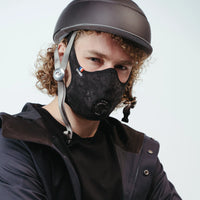
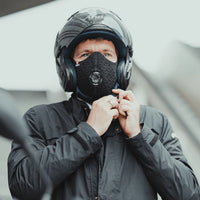
Ready to stop rebuying disposables? Check out our shooting range lead mask - one mask, replaceable filters, built to actually last. 💪
Useful sources
-
OSHA - Lead Exposure in the Construction and General Industries / Indoor Firing Ranges: osha.gov/sites/default/files/publications/OSHA3772.pdf
-
CDC/NIOSH - Health Hazard Evaluation reports on indoor firing ranges: cdc.gov/niosh/hhe
-
NCBI/PMC - Comparative performance of N95 and elastomeric respirators: pmc.ncbi.nlm.nih.gov/articles/PMC10245236
-
MIT News - The environmental toll of disposable masks: news.mit.edu/2021/covid-masks-environment-0720

