
TLDR
Complete shooting range safety equipment = three things working together, not one hero product: a lead-filtering mask, hearing protection rated for gunfire, and ANSI Z87.1+ rated eyewear. Skip one and the other two can't cover the gap. 🎯
-
Lungs: a proper respirator (not a paper dust mask) against lead and combustion particles
-
Ears: NRR 22-34 dB protection, doubled up indoors
-
Eyes: Z87.1+ rated glasses against ricochet and case ejection
The mask is the piece almost everyone skips - and it's the one doing the most invisible damage control. We'll show you why, and how to build a kit where nothing fights with anything else.

Why you need all three - not just the loud one
Most shooters obsess over ear protection (fair, gunfire hurts) and remember eye pro because ranges make you wear it. The respirator? Almost always an afterthought. That's backwards.
Here's the thing: every shot releases a cloud of lead, barium, and antimony particles you can't see and won't feel - until years later. NIOSH and CDC data show airborne lead in indoor ranges can run over 40 times the OSHA permissible exposure limit (50 µg/m³, 8-hour average) (CDC/NIOSH, 2009). Meanwhile a single gunshot hits 140-175 dB, and OSHA's ceiling for impulsive noise is 140 dB (OSHA) - that's one shot, gone over the line, no averaging involved.
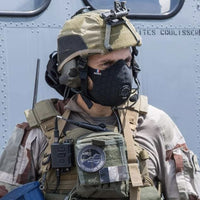
So the real kit isn't "mask OR muffs OR glasses." It's all three, sized so they don't undo each other. A great respirator that breaks your ear seal is a bad respirator. Glasses that push your mask off your nose bridge are bad glasses. Fit is the whole game.
The respirator: the piece most people skip (and shouldn't)
This is the anchor of the whole kit, and here's why: hearing loss and eye injuries are immediate and obvious. Lead exposure is silent and cumulative. You won't know you have a problem until a blood test tells you - and by then it's already in your bones.
What a real range respirator needs to do:
-
Filter fine particulates (lead dust is sub-micron - a bandana or surgical mask does nothing)
-
Seal tight against the face without gaps at the nose or jaw
-
Stay comfortable enough that you actually keep it on for the full session
-
Work with a filter you can swap, not a single-use shell you bin after one trip
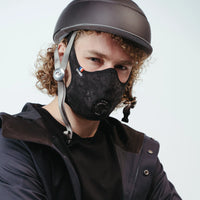
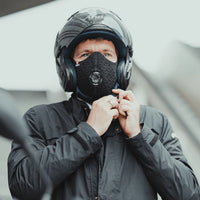
This is exactly where the R-PUR shooting range mask earns its spot as the anchor product of the kit. It's built around a replaceable filter cartridge and a low-profile silicone seal designed to sit flush against the face - which matters enormously once you stack ear muffs and safety glasses on top of it. A bulky industrial-style respirator picks fights with your earmuffs' seal and fogs your glasses. A slim, well-sealed mask doesn't.
Regulatory reference point: OSHA requires a written respiratory protection program under 29 CFR 1910.134 for range employees with elevated exposure, including fit testing (OSHA). If OSHA requires this level of rigor for range staff, a weekend shooter benefits from the same logic - even without the paperwork.
Hearing protection: get the NRR math right
Noise Reduction Rating (NRR) numbers on the box aren't the real-world number. The actual reduction is roughly (NRR − 7) ÷ 2. So an NRR 29 earplug gives you about 11 dB of real protection, not 29 (NIOSH-based guidance).
Quick reference:
|
Setting |
Minimum NRR |
Best practice |
|
Outdoor range |
22-25 dB |
Single protection (muffs or plugs) |
|
Indoor range |
28 dB+ |
Consider doubling up |
|
High-caliber / indoor combo |
- |
Plugs (NRR 32+) plus muffs (NRR 34+) |
Double protection (plugs under muffs) is the standard NIOSH and range-safety officers recommend once you're indoors with rifles or magnums bouncing sound off concrete walls. It adds roughly 4-5 dB over either device alone - not double the number, but enough to matter over a long session.
The fit challenge here is real: earmuffs need a full seal around the ear, and a mask strap running across that same zone breaks it instantly. This is why low-profile mask straps that sit higher on the head - not directly over the ear canal - matter so much for anyone wearing a mask + ear protection combo regularly.
Eye protection: Z87.1+ is non-negotiable
Regular glasses, including prescription ones, are not rated for range use. Ranges require ANSI Z87.1+ rated eyewear - the "+" is what matters. Basic Z87.1 only passes a dropped-ball test; Z87.1+ passes high-velocity impact testing (a ¼-inch steel ball at roughly 150 ft/s), which is what actually stops ricochet fragments and ejected brass (ANSI Z87.1 impact standards).
Checklist for range eyewear:
-
✅ Marked Z87+ (not just Z87) on the lens or frame
-
✅ Wrap-around design for side/backsplash coverage
-
✅ Anti-fog coating - critical once you're also wearing a mask that pushes warm breath upward
-
❌ No, sunglasses from the gas station don't count
Where eye and ear protection for shooting collide with your mask: fogging. Warm exhaled air escaping a poorly sealed mask rises straight into your lenses. A mask with a proper exhale valve and tight nose seal solves 90% of this before you even touch an anti-fog spray.
How the three pieces should fit together
Build the kit in this order, and fit-check in this order too:
-
Mask first. Get a seal against your face shape before adding anything else.
-
Glasses second. Slide the arms over your ears, check the mask strap doesn't push the frame off your nose.
-
Muffs or plugs last. Muffs need to clear the glasses' arms and the mask strap without gapping.
If any piece breaks another's seal, that's not a "deal with it" problem - swap the piece that's fighting. Usually it's an oversized industrial respirator or muffs with a tiny cup that wasn't built to share space with anything else.

FAQ
What's the minimum safety equipment for a shooting range?
At minimum: ANSI Z87.1+ eye protection and NRR 22+ hearing protection - most ranges won't let you on the line without both. A respirator isn't usually mandatory by range rules, but it's essential for lead exposure control, especially indoors.
Do I need a respirator if the range has good ventilation?
Ventilation reduces airborne lead but doesn't eliminate it. NIOSH studies still found elevated blood lead levels in range users even at facilities with ventilation systems in place (CDC/NIOSH). A mask is still the safer call, especially for frequent shooters or indoor sessions.
Can I wear a respirator mask under ear muffs?
Yes, as long as the mask strap sits above or below the ear canal rather than crossing it. Low-profile masks designed for range use account for this; bulkier industrial respirators often don't.
How often should I replace my hearing protection or mask filter?
Foam plugs: after a few uses or once they lose shape. Muffs: check cushion seals every season. Mask filters: check the manufacturer's session-count guidance - most respirator cartridges are rated for a set number of hours of active exposure, not indefinite use.
Ready to build your kit?
Start with the piece most people skip - your lungs will thank you long after your ears and eyes have already been covered. Check out the shooting range lead mask and build the rest of your kit around it.
Sources
